What a Damp Patch on a Wall But No Leak Means

A damp patch on a wall signals trouble. It needs quick action to stop expensive fixes and keep the property safe. This wetness comes from moisture getting into the building, either from air settling on surfaces or water soaking into the structure itself.
Ignoring damp can ruin walls, even causing them to collapse. You usually spot these patches first through discolored paint or wallpaper peeling away. Damp doesn’t just go away. It can start from condensation, bad insulation, or problems with how the building was put together.
In some places, damp is widespread because of the climate and heavy rain. Water can leak in through broken roof tiles or seep into the foundations. This leads to wet spots on floors and walls. Sometimes a damp problem is just poor ventilation – an easy fix. Other times, it means a serious structural flaw.
How Moisture Travels Through Walls Without an Obvious Leak

Moisture moves through walls even without a clear leak. It does this in a few ways: bulk water moving, moisture wicked by capillary action, humid air currents, and vapor diffusion. A wet spot often shows up far from where the water actually got in. This happens because moisture finds its way through hidden gaps, connections, porous materials, and colder spots inside the building.
If you see damp patches that keep coming back, it means there is an underlying moisture problem that hasn’t been fixed.
Understanding Capillary Action and Wicking
Capillary action, also called capillary wicking, shows how moisture moves through porous building materials. Water travels upwards, against gravity, through tiny pores found in brickwork, mortar, and plaster. Rising damp is a good example; ground moisture gets pulled into walls because the damp proof course (DPC) has failed. Water can soak in from the ground or outside, then wick through the wall structure, leading to damp patches inside. Bad repointing – using cement, for instance – can trap this moisture. This stops evaporation and makes capillary action much worse.
Moisture Movement Through Hidden Voids and Building Materials
Dampness travels along hidden paths and through building materials, often showing up far from where it started. Water and humidity find their way through unseen spaces – floor/ceiling voids, wall cavities, and insulation layers. This makes a wet spot appear in one place, while the water actually entered somewhere else. The damp mark on your wall is just where moisture gathered, slowed, or hit a cool surface.
Water can follow joists, cable runs, pipe chases, cavity trays, and even plasterboard joints. The first stain you see? That’s usually the last stop for the moisture.
The Role of Cold Surfaces in Moisture Migration
Cold surfaces play a big role in how moisture moves, especially when condensation forms. Imagine warm, humid air hitting a much colder spot – the moisture then turns into liquid water. You often see this on outside walls, on ceilings under attics, or even behind furniture. It’s common where insulation is bad or cold gets through easily.
Those damp spots you feel are cold because the surface cools down. If your home’s relative humidity goes above 60% and you find a wet patch on a chilly surface, you’ve likely got condensation. Bad insulation makes these cold areas, drawing in moisture from the air.
Uncovering the True Causes of Hidden Wall Damp
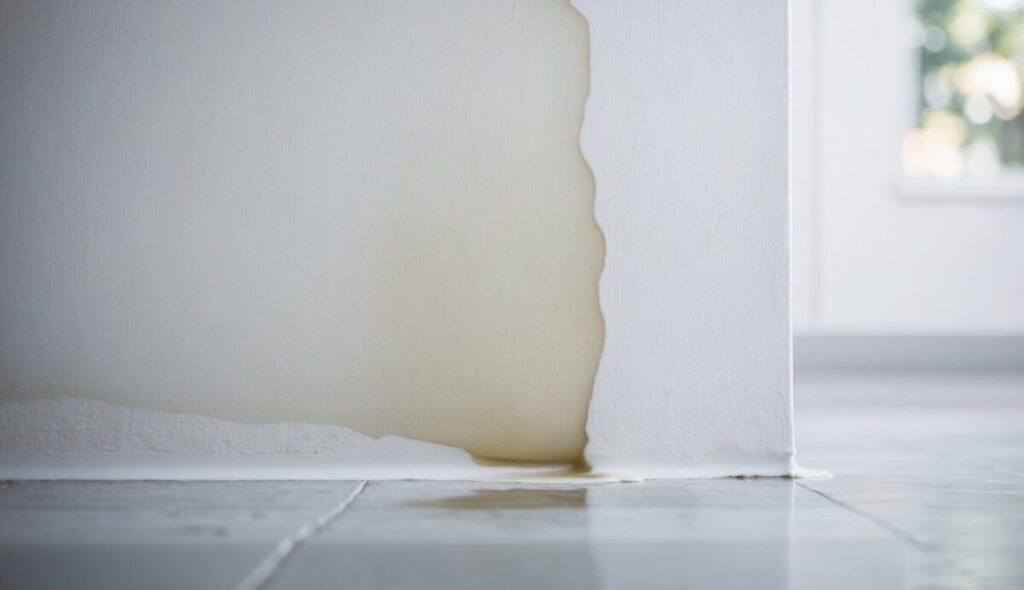
Damp spots on walls, with no obvious leaks, often point to deeper problems. Condensation, penetrating damp, rising damp, or hidden pipe leaks could be the cause. These issues creep up slowly, making it hard to find the real source without a good look. Ignoring wet walls can damage your home’s structure and even hurt your health.
Finding the exact cause of damp is key to fixing it right. Take a close look at the damp patch itself – how it looks, where it sits, and what’s going on around it. These details offer big clues.
Condensation: Indoor Humidity and Cold Spots
Damp patches often stem from condensation, especially when a leak isn’t obvious. Daily tasks like cooking, showering, or even just breathing put moisture into the air. Poorly insulated walls create cold spots, which draw in this airborne moisture. If a room’s humidity stays over 60%, condensation likely causes the dampness. You’ll often see these patches in cold corners or tucked behind furniture. They usually feel cool and don’t seem linked to outdoor weather. Bad ventilation only makes the problem worse.
Penetrating Damp: External Water Ingress Without Visible Leaks
Water seeps into a building’s structure, causing penetrating damp, even without a clear leak. This problem usually worsens right after it rains. Often, flaws in the building’s outside shell are the cause – things like cracked brickwork, bad mortar, or crumbling render.
Poorly installed windows and sills can also steer water onto the outer walls.
Gutters that leak – maybe they’re broken or just too small – splash water back onto outside walls. This then shows up as damp spots inside.
Even tiny cracks in porous bricks or other outside walls let a lot of moisture in. Penetrating damp spots can show up anywhere on a wall. They grow after rain, making paint or wallpaper peel and paintwork turn discolored.
Rising Damp: Moisture from the Ground Up
Moisture from the ground can travel up through walls – this is called rising damp. It happens when the damp proof course (DPC) in the outer wall either fails or is missing. The inner cavity wall then soaks up the moisture. Walls can buckle or even collapse if you don’t fix this problem. You’ll often see a “tide mark” on the lower wall sections. You can spot it no matter the weather. High water tables also play a role in rising damp.
Hidden Internal Leaks: Pipes or Appliances Behind Walls
Leaks inside walls, from pipes or appliances, can cause damp spots. A wet patch that won’t go away, especially one at eye level or oddly shaped, probably means a slow leak from a water or waste pipe.
If you see dampness near outlets, light fixtures, or structural parts of your home, you need to check it out. Someone trained for this might have to cut open the wall to find and fix the leak. For example, a leak from a radiator upstairs could travel along floor joists, showing up as a wet spot on a wall far from where it started. Washing machines and bathtubs often cause these hidden plumbing issues.
Diagnosing the Source of a Hidden Damp Patch
Finding out where a hidden damp patch comes from needs a clear approach. Start with simple DIY checks at home, then maybe call in experts for surveys. The main thing is finding the exact path the moisture took and where it began. Watch how the patch acts – does it show up after rain, for instance, or dry out overnight? These details offer big clues. Catching the problem early and knowing what it is means you can fix it right.
Initial DIY Checks to Pinpoint the Problem
Notice when the damp patch shows up or gets worse. If rain brings it out, it’s probably penetrating damp. If it stays constant or appears no matter the weather, think about condensation or rising damp.
Feel for cold spots – especially behind furniture or on outside walls – that could signal condensation. Touch the patch with your hand; see if it feels cool or chilly.
Look for problems on the outside, things like blocked gutters, broken masonry, or bad window seals. You can buy a basic damp meter to compare moisture levels in different wall areas. This helps pinpoint where water might be coming from. Also, watch for any musty smells or mold.
Using a Moisture Meter to Track Damp Pathways
A damp meter – or moisture meter – pinpoints wet spots and confirms moisture. This small device compares moisture levels in different wall areas, showing how far dampness spread and where it came from. Higher readings near the ground might mean rising damp, for instance. A spike after rain points to water getting through the wall. A hygrometer checks humidity and temperature to see if condensation is likely. Such checks give vital diagnostic details without damaging anything.
When to Call a Professional for a Damp Survey
When DIY checks fail to pinpoint the cause, or if a damp patch keeps growing, gets worse, or brings mold, it’s time for a professional damp survey. A damp expert will look closely at everything. They often use tools like thermal cameras to find hidden damp spots and sources – no need to tear up walls. These specialists can correctly diagnose tough problems. This includes structural failures, leaks you can’t see, or bad rising/penetrating damp.
Risks of Ignoring Hidden Damp on Walls
That small damp patch you’ve been ignoring? It’s a bigger problem than you think. Constant damp slowly ruins a home’s structure, the air inside, and even how comfortable it feels.
Left alone, damp causes serious structural damage. Wood can rot – that’s both wet and dry rot – and salt deposits form, letting in even more moisture. It grows mold, which leads to breathing problems, allergies, and asthma. The situation only gets worse, meaning bigger, more expensive fixes down the road. Catching it early saves a lot of trouble.
Repairing and Preventing Hidden Wall Damp
Fixing hidden wall damp needs a two-part plan: tackle the cause first, then add ways to stop moisture and keep the building sound.
That means addressing the root problem and then restoring damaged spots. Say you have penetrating damp. Repairs could mean fixing leaky gutters outside, repointing bricks, mending cracked rendering, or sealing windows better. If rising damp is the culprit, workers might install or repair a damp-proof course (DPC). Condensation calls for more ventilation, better insulation, and tools like dehumidifiers to cut moisture.
Once the source is gone, affected building materials often need removing and replacing. Sometimes this involves breathable paint or a damp-proof membrane. Regular checks on the outside of your home and managing indoor humidity are key to stopping future damp. A damp patch reappearing after you redecorate means the real issue is still lurking.